What Are Custom Business Signs? A Complete Beginner’s Guide

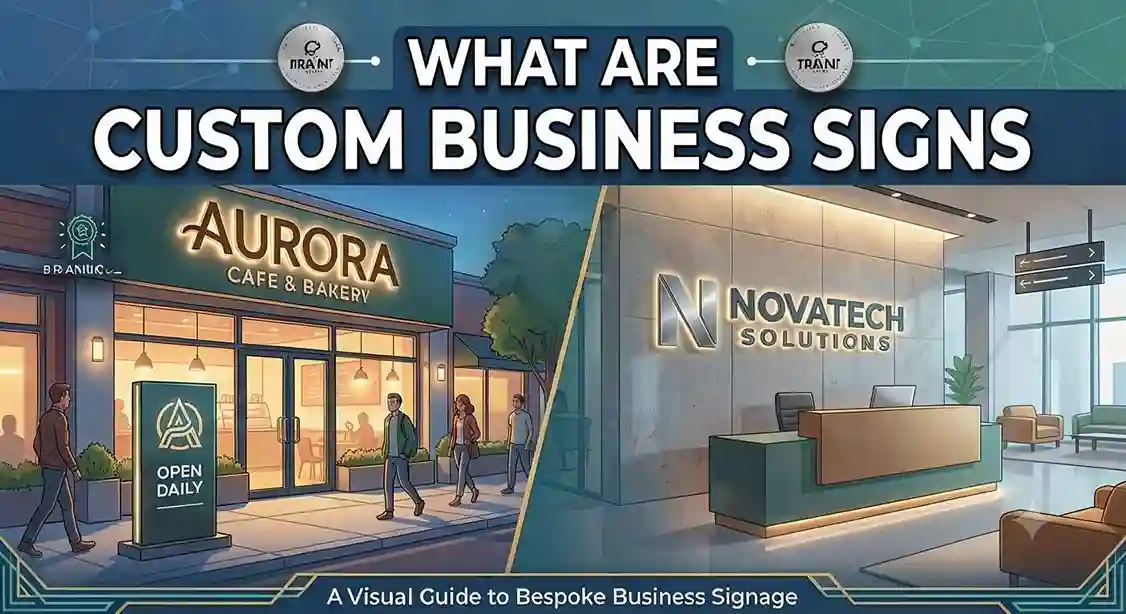
If you’ve ever driven down a high street and instantly recognised a business before you could even read the name — that’s a custom business sign doing its job. It’s the difference between a shopfront that blends into the block and one that stops people mid-stride.
But if you’re setting up a new business, renovating a storefront, or just tired of a sign that doesn’t represent your brand, the world of business signage can feel surprisingly technical. Channel letters, halo-lit, push-through, raceways — the terminology alone can be a barrier before you’ve even thought about design.
This guide breaks it all down in plain English. By the end, you’ll understand what a custom business sign actually is, the main types available, how they’re made, what affects the price, and what questions to ask before you request a quote.
What Is a Custom Business Sign?
A custom business sign is any sign that’s designed and fabricated specifically for one business, rather than pulled from a generic template or a mass-produced catalogue. Instead of a standard rectangular panel with your name printed on it, a custom sign is built around your exact logo, brand colours, chosen materials, and the specific conditions of your building or storefront.
The word “custom” is doing a lot of work here. It means:
- Your logo, not a stock font. The letterforms are cut or built to match your actual brand identity, not approximated with the closest matching typeface.
- Your colours, matched precisely. Whether that’s a Pantone-matched powder coat or a specific LED colour temperature, a genuinely custom sign holds your brand colour accurately.
- Your building, considered specifically. Wall material, mounting height, viewing distance, and local lighting conditions all influence the right sign for your specific location — a custom sign is designed with those factors in mind, not despite them.
This is different from off-the-shelf signage, where you’re choosing from pre-set templates and limited sizing options. Custom signage costs more upfront in most cases, but it’s the only way to guarantee your signage looks like your brand rather than a placeholder for it.
Why Custom Business Signs Matter
It’s tempting to treat signage as an afterthought — something to sort out after the fit-out, the stock, and the staff are all in place. But your sign is often the very first thing a potential customer sees, and first impressions in retail and hospitality form in seconds.
A well-designed custom sign does several jobs at once:
- It makes you findable. Especially for businesses relying on foot traffic or drive-by visibility, a clear, well-lit sign is often the deciding factor in whether someone walks in or keeps walking.
- It signals quality before anyone sees your product. A crisp, professionally fabricated sign implies the same standard inside. A faded, poorly lit, or generic sign can undercut a genuinely excellent business before customers ever get through the door.
- It builds brand recognition over time. Consistent signage across multiple locations, or simply a distinctive sign that becomes associated with your brand in a local area, is a long-term marketing asset — one that keeps working 24 hours a day without ongoing spend.
- It works while you’re closed. Illuminated signage in particular continues to advertise your business well after the doors are locked, which matters more than most business owners initially assume.
The Main Types of Custom Business Signs
There isn’t one single “custom sign” — there’s a whole category of sign types, each suited to different budgets, buildings, and goals. Here’s an overview of the most common types you’ll come across.
Channel Letters
Channel letters signs are individual, three-dimensional letters, each fabricated as its own sealed unit with a metal or acrylic body. They’re the classic “letters on the building” look seen on shopping strips and shopping centres everywhere. Channel letters can be front-lit (illuminated from the face), halo-lit (glowing from behind against the wall), or left non-illuminated.
3D Metal Signs
Cut from sheet metal — usually aluminium, stainless steel, or brass — 3D metal signs have real physical depth, typically anywhere from 25mm to 100mm. Because the letters have genuine dimension, they catch and reflect natural light differently throughout the day, giving a premium look that flat signage can’t replicate. These can be left raw, powder-coated in any colour, or paired with LED lighting.
LED Neon Signs
Modern LED neon signs recreate the warm glow of traditional glass neon using flexible LED tubing, without the fragility, heat, or running costs of the original. They’re popular for interior branding — café walls, salon receptions, gyms — as well as window displays and event signage. Because the tubing can be bent into virtually any shape, LED neon is one of the most flexible formats for logos, phrases, and illustrative wall art.
Backlit (Halo-Lit) Signs
Instead of shining light outward through the face of a letter, backlit or halo-lit signs conceal LEDs behind the letter or panel. The light washes onto the wall behind the sign, creating a soft glowing ring, or “halo,” around each shape. This produces a premium, glare-free look that’s popular for reception areas, hotel lobbies, and upmarket storefronts.
Acrylic and Push-Through Signs
Acrylic signage uses cut or laser-etched acrylic panels, often mounted on stand-offs for a clean, modern shopfront look. Push through signs take this further: letters or logos are cut from thick acrylic and pushed through a solid backing panel so they sit slightly proud of the surface, often lit from behind for an eye-catching, dimensional glow.
Lightbox Signs
A lightbox sign is a fully enclosed, internally lit sign box, typically used above entryways or on pylon signs, offering strong 24/7 visibility. Because the entire face is illuminated evenly, lightboxes are a practical choice where maximum brightness and readability matter more than dimensional styling.
Blade Signs
Mounted perpendicular to a building rather than flat against it, blade signs project outward so they’re visible to foot traffic approaching from either direction along a street — ideal for busy pedestrian strips where a flat, wall-mounted sign might not be seen until someone is already level with the shopfront.
Indoor vs Outdoor Signage: What’s the Difference?
Not every sign type is suited to every environment, and this is one of the most common points of confusion for first-time buyers.
Indoor signs — reception logos, interior office signage, café wall art — generally use lighter materials, don’t need weatherproof components, and have more flexibility in finish, since they’re not exposed to rain, UV, or temperature swings.
Outdoor signs need to survive exposure to sun, rain, wind loading, and in coastal areas, salt air. This affects both the metal grade used (marine-grade 316 stainless steel is common in coastal regions, versus standard aluminium inland) and the LED components, which need to be properly rated for outdoor use to avoid premature failure. A sign designed for an interior reception wall will not hold up long-term if installed on an exterior facade, and vice versa — an outdoor-rated sign is often unnecessarily bulky or expensive for a purely indoor application.
Materials Commonly Used in Custom Signage
The material you choose affects durability, cost, and the overall look of the finished sign:
- Aluminium — lightweight, corrosion-resistant, and cost-effective. The most common material for general shopfront and office signage.
- Stainless steel — heavier and more durable than aluminium, with 316-grade being the preferred choice for coastal or high-exposure sites.
- Brass and copper — premium, warm-toned finishes that develop a natural patina over time, often chosen for law firms, hotels, and heritage-style branding.
- Corten (weathering steel) — develops a deliberate rusted texture, popular for cafés, breweries, and rustic brand identities.
- Acrylic — versatile, lightweight, and available in clear, coloured, or frosted finishes, often used for illuminated or push-through signage.
Illumination Options: Front-Lit, Backlit, or Non-Illuminated?
Lighting is one of the biggest decisions in custom signage, and it comes down to three broad categories:
- Non-illuminated — the lowest-cost option, with no wiring or power draw. Suited to indoor signage or daytime-only visibility needs.
- Front-lit (face-lit) — LEDs shine forward through the letter or panel face, maximising brightness and legibility from a distance. The standard choice for street-facing retail.
- Halo-lit (backlit) — LEDs are hidden behind the sign, casting a soft glow onto the wall. This reads as premium and glare-free, and photographs particularly well at night.
Some businesses choose a combination — a lit face for daytime brightness and legibility, paired with a halo glow for after-dark ambiance — though this dual-illumination approach typically costs more due to the additional wiring and separate LED circuits required.
What Do Custom Business Signs Cost?
Pricing varies enormously depending on sign type, size, material, and lighting, but as a rough general guide:
- Small, non-illuminated indoor signage often starts in the low hundreds of dollars.
- Mid-sized illuminated signage — a typical shopfront logo or channel letter set — commonly falls in the low-to-mid thousands.
- Large, illuminated, or multi-material facade signage can run into five figures, particularly for full building fit-outs or franchise fascia packages.
The biggest cost drivers are size, letter or panel count, material choice, and whether the sign is illuminated. A reputable signage supplier should be able to give you an itemised, fixed quote before you commit to anything — if a quote arrives without a breakdown of materials, fabrication, and installation, that’s worth asking about directly.
The Typical Custom Sign Design Process
While the details vary between suppliers, most custom signage projects follow a similar sequence:
- Consultation — you provide your logo, business name, or a reference design, along with details about the installation site.
- Mockup or design proof — a visual render showing exactly what the finished sign will look like, often on a photo of your actual building or wall.
- Fabrication — once approved, the sign is cut, welded, finished, and wired (if illuminated) in the workshop.
- Installation or delivery — the finished sign is either shipped with mounting hardware and instructions, or installed directly by the supplier’s team.
- Feedback (optional)
Asking to see a mockup before production begins is one of the simplest ways to avoid an expensive mismatch between what you imagined and what arrives.
Do You Need Council Approval for a Business Sign?
In many parts of Australia, illuminated or larger exterior signage requires local council approval, particularly for signs above a certain size, signs on heritage-listed buildings, or signage within shopping centres that have their own separate fit-out guidelines. Requirements vary significantly between councils, so it’s worth checking with your local council — or asking your signage supplier whether they can flag likely permit requirements as part of your quote.
How to Choose the Right Sign for Your Business
A few practical questions can help narrow down the right option:
- How far away does it need to be read from? Street-facing signage read from a distance generally favours front-lit or larger channel letters over subtler halo-lit options.
- Is it indoor, outdoor, or both? This affects material choice and whether marine-grade components are necessary.
- What’s the mood you’re going for? Bright and bold, or premium and understated? Front-lit and halo-lit signage create very different impressions even using the same logo.
- What’s realistic for your budget right now? A non-illuminated sign now, upgraded to illumination later, is often a perfectly reasonable staged approach.
Common Mistakes to Avoid
- Skipping the mockup stage. Approving a design without seeing it rendered on your actual building is one of the most common sources of buyer’s remorse.
- Choosing the wrong material for the location. Standard aluminium in a coastal environment, for example, can corrode faster than marine-grade stainless steel would.
- Underestimating council requirements. Ordering a sign before confirming permit requirements can lead to costly delays or modifications.
- Focusing only on daytime appearance. A sign that looks great at noon but is illegible or unlit at night misses half its potential value for many businesses.
Frequently Asked Questions
How long does a custom business sign take to make?
Most custom signs take anywhere from one to three weeks from design approval to completion, depending on complexity, materials, and whether the sign is illuminated.
Can I get a custom sign without illumination?
Yes — non-illuminated signage is a common, lower-cost option, particularly for indoor use or businesses that don’t need after-dark visibility.
What’s the difference between channel letters and 3D metal signs?
Channel letters are typically hollow, sealed units with internal LEDs designed for illumination. 3D metal signs are solid or semi-solid fabricated letters, which may or may not be illuminated, and generally have a heavier, more architectural feel.
Do custom signs come with a warranty?
Reputable signage suppliers typically offer a workmanship warranty, commonly covering LED components and fabrication for a set period — it’s worth confirming this before ordering.